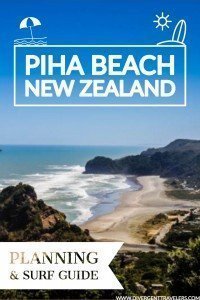




Piha Beach is one of the most dramatic beaches to be found on the New Zealand coastline. This striking, volcanic, black sand beach is not only beautifully rugged but with crashing waves and big swells, is one of the best surfing spots in the country.
Despite its small population of just a few hundred people, this small community swells on the weekends and in the holidays, when Aucklanders arrive in droves from the city to hang out at the beach.
With its fame and popularity though, Piha Beach has still maintained its small-town feel, and after hitting the waves or relaxing on the sands you can enjoy the charming cafes of Piha itself.
The surrounding area has a lot to offer too, and you’ll quickly realize that this isn’t just a destination for surfers. There are waterfalls, a huge national park and much more to be found nearby. To help you to plan your trip to one of the best beaches in New Zealand, here’s everything you need to know about Piha Beach.
Don’t leave home without: Lonely Planet New Zealand (Travel Guide)

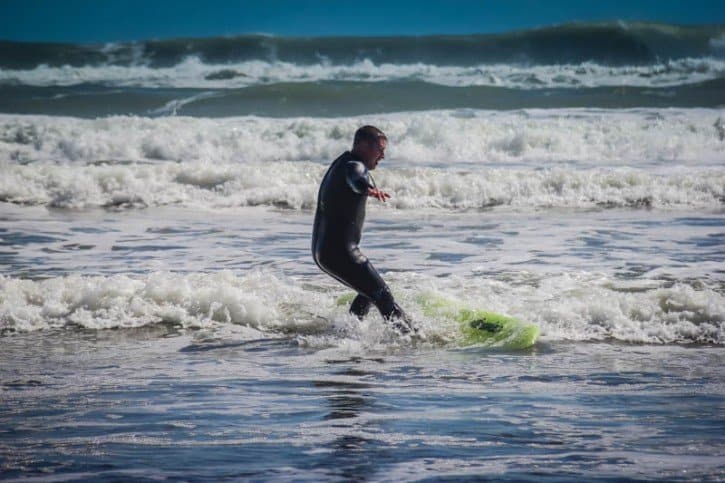
Surfing at Piha Beach
Piha Beach is one of the most famed surfing locations in New Zealand, and it is renowned for having excellent surf conditions throughout the year. Much of the area though is best stuck to by those with experience, as the waves can be large and the currents incredibly strong.
You’re best checking in with the local surf club and the lifeguards before heading out, particularly if it’s your first time hitting the waves here. If you’re not a surfer, you’ll easily pass plenty of time watching those out in the water taking on the big waves from the safety of the beach.
If you’ve never surfed before, there are some calmer, quieter areas where you can learn in safety too though, and you’ll find the Piha Surf School are more than happy to take you out and show the ropes, in one of the most iconic surfing destinations in the country.
Top Recommended Tours:
Learning to Surf at Piha Beach – Our Experience
45 minutes outside of Auckland puts you into a subtropical climate. A place so quiet, the only sound you hear for miles is the crashing of the surf against the beaches. We had decided to spend the afternoon surfing, essentially learning how to surf for the first time, and we weren’t quite sure what we were in for.
Neither of us had any surfing experience unless you count stand up paddleboarding in Maui. We’ve done that, but that is the closest we’ve been to handling a surfboard. We lingered outside our hostel in downtown Auckland as the company arrived to take us surfing for the afternoon.
We were headed outside of Auckland to a place on the West coast of New Zealand’s North Island called Piha Beach.
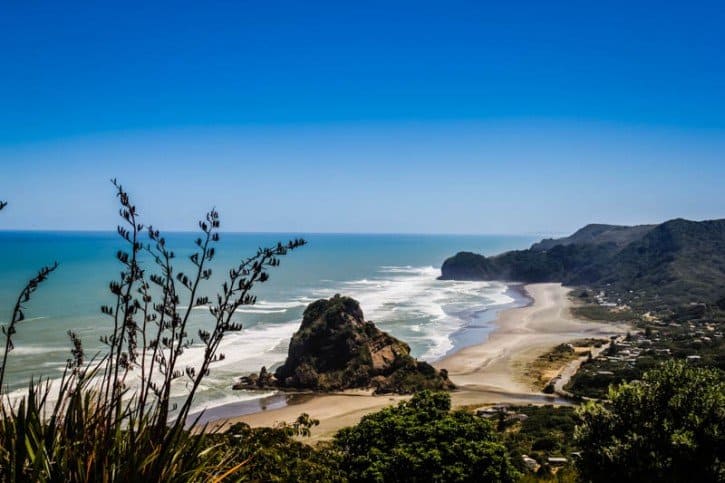
En route to the beach, we stopped at a scenic overlook to catch a view of our classroom for the afternoon. Lions rock sits in the foreground and the large expanse of black sand beaches cover all the land behind it.
It is one of the most beautiful places I have ever been to. As far as the eye can see, it is just raw natural beauty. Crowded? Not a chance. The whole day we were there we saw maybe a handful of people.
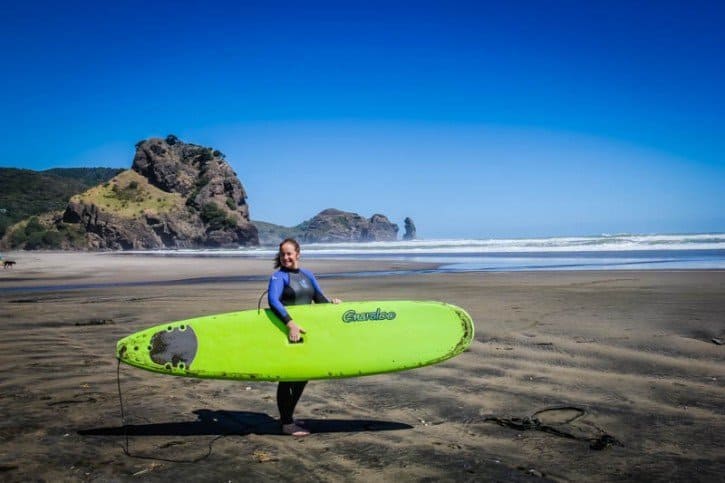
After leaving the overlook we arrived in the park entrance to Piha beach. The nerves were starting to rise a little as we stood waiting for the wetsuit assignment while the waves played as a soundtrack in the background. I have never been surfing before and I wasn’t sure how I felt about bobbing along as shark bait in the surf.
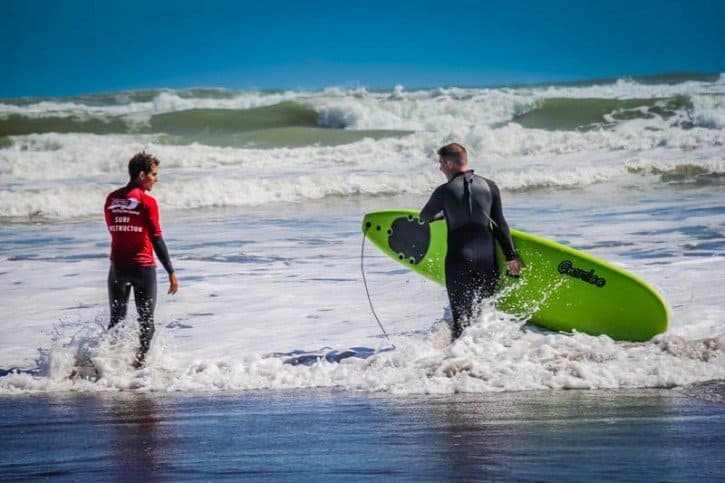
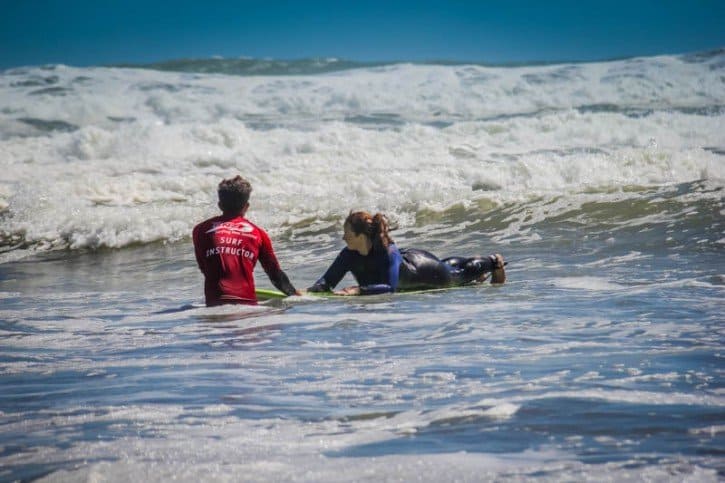
Felipe, our surf instructor, assured me that although we will be in the ocean, and yes there are sharks in the ocean, our classroom for the day isn’t a place that they frequent. I know, I am probably being dramatic, but sharks are scary and a run-in with one while surfing isn’t on my to-do list for this trip.
Once suited up, we carried our surfboards to the beach where we made a circle around Felipe and instruction commenced. We were explained how the beach works, where the rips and currents are, how they work and how to deal with them when you are in the water.
We were also briefed on safety. How to get out of a rip or current and how to protect ourselves when we fell off our boards to avoid being hit by the board.
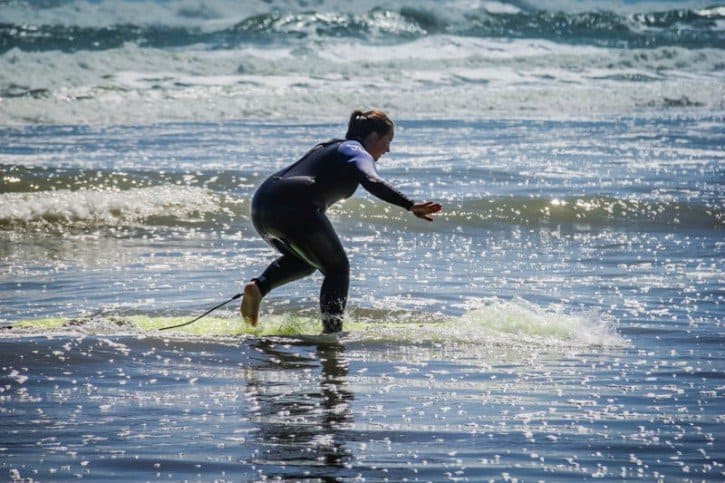
After getting a grasp on that, we were taught the terms for the board and the process of catching a wave. We’ve all seen people surfing on TV and they make it look pretty easy, but there is a little more to it than what we see. We were taught how to mount the board, where to place our bodies, to paddle and then the steps to getting up on the board.
All of this takes about 30 minutes. Then it is straight to the water to test your new skills. We had great surf when we entered the water with larger waves further in that broke to smaller waves which made for great learning. Getting on the board and preparing to catch a wave was easier than I had thought.
The hard part lies in the timing of the wave. Knowing when to start paddling, how long to paddle and when to get up on the board. Knowing which waves to catch was also challenging if you have no experience reading waves. I knew they came in sets, but reading those sets was difficult to my untrained eye.
By the end though, I was able to figure it out based on how close the waves were together. As far as timing for mounting, paddling and standing, well, that leaves some to desire still. We were both able to catch several waves successfully and I am sure provided lots of entertainment trying to stand up.
However, in the end, we were both successful. The balance that is required on the board is very much like riding a horse, oddly enough. So I didn’t find too many struggles in staying on the board once I was on it. I had many knee rides and stood up for 3 very short rides. Not bad for a complete beginner.
If you are looking for an amazing experience outside of Auckland, head out to Piha for beautiful scenery and a gnarly day of surfing.
Other Things to do in Piha Beach
The most popular things to do in Piha are of course surfing and living that beach lifestyle, but there’s much more to this small community than that. Here are our favorite things to do in Piha Beach.
North and South Piha Beach
The long Piha Beach is split into two distinct sections, North and South, and they are roughly delineated by the dramatic sight of the rugged Lion Rock which rises from the ocean between them.
The black sands of both sections are generally patrolled by the lifesaving club, however, North Piha Beach is generally considered to have safer water, with smaller waves and fewer currents than the south. Surfers will want to head south if they are experienced, but if not, the north is a good place for newbies, or for those wanting a swim.
North Beach is a bit further away, and you’ll need to walk a bit further from the parking areas and town to reach it, but you might find it just a little bit quieter than the southern section, once you get past Lion Rock.

Lion Rock
The most prominent feature of the scenery along the coast at Piha is the seemingly immovable Lion Rock. This is the remnant of a volcano, and it divides Piha Beach in half between north and south.
In the local Maori dialect, the name of the rock is Te Piha, which translates to English as Lion Rock, and Piha was the name given by Europeans to the beach here.
Although you can’t reach the summit, there is a trail that leads most of the way, winding its way from the black sand beach below, along the rocky outcrops and crags, offering those tackling the walk unbelievable views along the beaches found on either side.
Kitekite Falls
Piha isn’t just about the surfing though, and inland there is some truly spectacular scenery awaiting adventurers. One of the best places to visit is Kitekite Falls, which is just as dramatic as the coastline, in its own way.
This tall, three-tiered waterfall is stunning to see, as the water crashes down from a great height into separate plunge pools found on the different levels, before finally tumbling into the largest pool of water at the base.
The waterfall is found in some dense forest, and a hike along a well-worn trail is needed to reach the lookouts from the nearby carpark, which is just a short drive out of Piha.
In summer, when it’s hot enough, you might fancy jumping into the cold water to cool off in the humidity.

Waitakere Ranges Regional Park
The Waitakere Ranges are a massive mountain range that is found between Piha and Auckland. Despite its close proximity to the city, it’s an unrivaled wilderness, teeming with unique New Zealand wildlife and thriving with flora.
It’s a protected region, and if you are staying in Piha for more than the day, then you have a great opportunity to explore at least some part once you’ve spent enough time on the beach. It’s an incredible environment, with hills and mountain tops formed from the same volcanic activity millennia ago that also gave the coast its vivid black sand.
There are quite literally hundreds of kilometers of walking trails to hike within this enormous area and innumerable opportunities to explore untouched parts of the range, with few other visitors around.
Stop in at the Arataki Visitors Centre to learn more about the Waitakere Range National Park, and to pick up a few maps of the local area too, to help you get out there on the trails.
There are waterfalls, epic viewpoints and unrivaled scenery waiting for you here, and if you have the time and are up for a real challenge, then you can even take on the Hillary Trail, a four-day hike through the range that requires you to be self-supported, but that will get you deep into the forest.
Top Recommended Tours:
- Adventure Day Trip to West Coast from Auckland
- Full-Day West Coast Photo & Discovery Tour with lunch
- Waitakere Ranges Guided Walk from Auckland
How to Travel to Piha Beach
Piha Beach is located in the northwest of New Zealand, and part of its popularity has somewhat to do with the fact that it’s just a 45-minute drive away from Auckland.
Getting here with your own transport from the big city is easy, but if you don’t have your own transport, then you can also take one of the privately run shuttle buses that head here regularly, and that cater to travelers.
If you have time to spend in the region, you can easily explore the rest of the region too, or join a west coast tour that takes you to many of the other beautiful beaches and the national parks in the region.
Piha is small enough to get around on foot, and you can walk to most of the major attractions and the beach, although getting further afield can be tricky without transport.
When to Visit Piha Beach
If you want to enjoy Piha Beach when the weather is at its best, then the summer months are of course the best time of year to visit. Between November and March, you can expect hot weather, with December and January generally recording the highest temperatures, making the beach just that little bit more enjoyable.
This is also the busiest time of year, as travelers and locals arrive to enjoy the sunshine on the coast. If you want to avoid the worst of the crowds and still enjoy great weather, considering traveling here in the shoulder season, at the end of spring or the beginning of Autumn, and before the cold weather and rains begin.
Any time of the year, the weekends and public holidays are the worst time to visit if you want to avoid the crowds, as this is when locals from Auckland will head this way, on their day’s off from work. Midweek, you may find it comparatively deserted, even in high season.
Where to Stay in Piha Beach
It’s easy enough to visit Piha Beach on a day trip from Auckland if you have your own transport, but if like many, you fall in love with the place and want to stay longer to explore all that it has to offer, then there are a few accommodation options, although being a small not community, not too many.
Many choose to camp out under the stars, particularly in summer, and you can find dedicated campsites in the area, with the closest to the beach being the Piha Domain Campground. There are numerous lodgings in the town and the wonderful Piha Beach House which overlooks the beach and offers affordable accommodation.
Safety on Piha Beach
Piha Beach might have excellent conditions for surfing, including crashing waves and huge surges, but the very conditions that make it popular for this adventurous sport, also cause some level of danger to the unaware.
In the past, numerous deaths have been recorded in the water, because there are huge, often invisible rip currents that can whisk you out to sea in moments.
There are lifeguards patrolling during peak hours, but always be careful regardless. Always ensure you check the conditions and keep to the safety zones if you are heading out for a swim.
| Recommended Tours | ||
 |  |  |
 |  |  |
| HIGHLIGHTS OF NEW ZEALAND Auckland to Christchurch 15 days Small Group 12-16 People | NEW ZEALAND–SOUTH ISLAND ENCOMPASSED Wellington to Wellington 16 days Small Group 12-16 People | NEW ZEALAND–NORTH ISLAND ENCOMPASSED Auckland to Wellington 10 Days Small Group 12-16 People |
| Check Price | Check Price | Check Price |
More on New Zealand:
- 51 Epic Things to Do in New Zealand
- Tongariro Crossing is the Best Hike in New Zealand
- Kaikoura Whale Watching: The Ultimate Guide
- Karangahake Gorge: Off the Beaten Track in NZ
- Things To Do In Kaikoura, New Zealand
- Blue Pools: New Zealand Best Kept Secret
- 25 New Zealand Photos That Showcase the South Island
- 19 North Island New Zealand Photos That Inspire Travel
- New Zealand Travel Guide
- Travel Recap- 5 Weeks in New Zealand
- Following in Frodo’s Steps at Hobbiton in New Zealand
- Our Encounter with the Yellow-Eyed Penguins in New Zealand
- Things To Do In Queenstown, New Zealand
Did you like this story? Share it!